
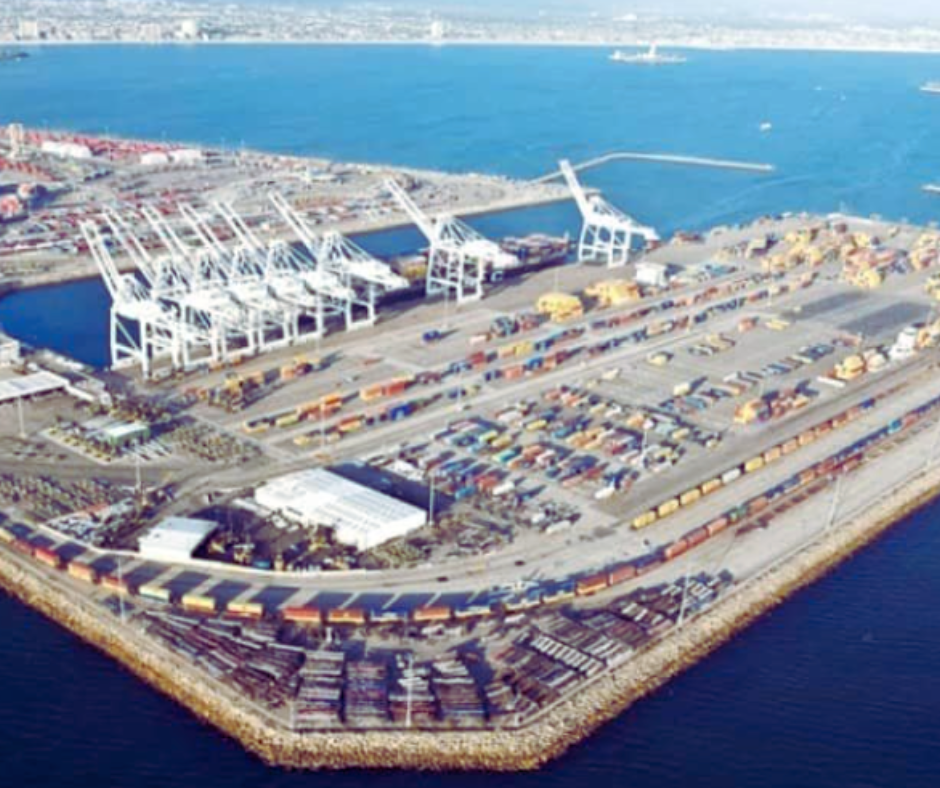
For decades, Pakistan blocked India from trading directly with Central Asia, and we were forced into long and expensive routes. India developed the Chabahar Port in Iran to bypass these barriers and secure a direct, faster gateway to the world. The port has already had a huge impact on trade and economy. Today, we face unpredictable U.S. sanctions and are taking steps to protect this investment. But the huge impact that Chabahar will have on the future of our economic growth is certain.
Breaking the Barriers to Trade
Before the development of Chabahar Port, India’s trade access to Afghanistan and the resource-rich Central Asian republics was effectively “landlocked” by Pakistan, which denied India overland transit rights. This forced India to rely on expensive and circuitous sea-and-land routes, leaving its regional economic and strategic ambitions vulnerable to neighborly tensions. The port was needed to create a permanent, alternative gateway that would bypass Pakistan entirely, allowing India to counter China’s maritime presence in the Arabian Sea (specifically at Gwadar) and secure a direct link to the International North-South Transport Corridor (INSTC). Developing this port was a strategic move to boost our economic growth and place in the global trade map.
Milestones in the Journey of Developing a New Global Trade Route
It took many years of diplomatic efforts to achieve international cooperation and navigate complex sanctions to clear the way for the development of Chabahar port.
- 2003 Tehran Declaration: The project was first conceptualized during President Mohammad Khatami’s visit to India, where both nations agreed to develop the port to improve regional connectivity.
- 2015 Lifting of Sanctions: The signing of the JCPOA (Iran Nuclear Deal) eased international sanctions on Iran, providing a diplomatic window for India to formalize its investment plans.
- 2016 Trilateral Agreement: During Prime Minister Modi’s visit to Tehran, India, Iran, and Afghanistan signed a historic pact. India committed $500 million to develop the Shahid Beheshti terminal and a further $1.6 billion for a related rail link.
- 2018 Operational Takeover: India officially took over the terminal’s operations through IPGL (India Ports Global Limited), marking the first time in history that India managed a port outside its own borders.
- 2024 Long-Term Contract: In May 2024, India and Iran signed a 10-year definitive agreement. This replaced the previous system of short-term renewals, giving India the legal security to install heavy machinery and long-term infrastructure at the port.
How Chabahar Contributes to Trade and Indian Economic Growth
The development of Chabahar Port transitioned from a long-standing diplomatic ambition into a functional maritime reality through a series of phased infrastructure investments and operational takeovers. Following the landmark 2016 trilateral agreement, India focused its efforts on the Shahid Beheshti terminal, where it installed heavy-duty mobile harbor cranes and other essential equipment to handle bulk and container cargo. The port became practically operational for India in October 2017 with the arrival of the first shipment of wheat destined for Afghanistan. By December 2018, IPGL officially took over operations, and the port has since seen consistent growth in berths and handling capacity, culminating in the 2024 long-term agreement, which provides the legal stability needed for India to invest in full-scale automation and further rail-link integration.
Some data points that indicate how significant Chabahar port operations are:
- Significant Volume Growth: Since India took over operations in late 2018, the terminal has handled over 8.4 million metric tonnes of bulk and general cargo.
- Container Traffic: The port has processed more than 90,000 TEUs, showcasing our growing technical capability to handle standardized global shipping.
- Logistics Efficiency: Trade through Chabahar and the linked INSTC has reduced transit times by 40% (from 45 days via the Suez Canal to roughly 25 days) and lowered costs by 30% for shipments to Central Asia.
- Humanitarian Pipeline: The port served as the primary conduit for India’s regional aid, facilitating the transit of 75,000 tonnes of wheat to Afghanistan in 2020 and 40,000 litres of pesticides to Iran to fight locust infestations.
- Connecting New Markets: The port has enabled direct trade links with CIS countries like Uzbekistan and Kazakhstan, which previously had negligible trade volumes with India due to the lack of a viable land route.
The “Crown Jewel” of the International North-South Transport Corridor
The International North-South Transport Corridor (INSTC) is a 7,200-km multi-modal miracle designed to connect India to Eurasia by bypassing the traditional route through the Suez Canal. Chabahar Port serves as the “crown jewel” and primary gateway for India’s entry into this network. A critical component of India’s role is the development of the Chabahar-Zahedan rail link (projected for 2026), which will connect the port directly to regional railway networks, fully operationalizing the corridor. India is leveraging this to tap into Central Asia’s multi-trillion dollar deposits of rare-earth minerals (such as Kazakhstan’s $46 trillion reserves), diversifying our supply chains and reducing strategic dependence on China. India has backed this vision with a $1 billion credit line for regional infrastructure, ensuring we remain at the heart of Eurasian trade.
Chabahar Port will continue to deliver immense trade and economic benefits to India for the decades to come. We can estimate future benefits as follows.
- The Trade Multiplier: By reducing costs by 30%, we trigger a “Trade Elasticity” effect, potentially increasing trade volumes with Eurasia by 45–60%, tapping into a $2 trillion market.
- The “Sovereign Risk” Efficiency Gain: Slashing transit times by 40% releases billions of dollars in “frozen capital” back into the Indian economy faster. It acts as a permanent insurance policy against Suez Canal congestion or regional instability.
- Energy Security & Strategic Hedge: Over the next 75 years, Chabahar serves as India’s link to the world’s largest untapped reserves, ensuring our high-tech and green-energy sectors are protected from global supply shocks.
The Risk of Unpredictable US Policy
U.S. secondary sanctions against Iran began in 1996 but became much more restrictive between 2010 and 2012. These laws targeted non-American entities, effectively blocking foreign banks and oil trade with Iran and making it impossible for Indian companies to invest in projects like Chabahar without risking access to the U.S. financial system. This decade of tightening restrictions froze all major economic engagement with Iran until specific waivers were later granted to India.
In 2018, the U.S. administration recognized that Chabahar was a vital humanitarian artery for the reconstruction of Afghanistan. Under the Iran Freedom and Counter-Proliferation Act (IFCA), India was granted a specific sanctions waiver. This allowed Indian entities to operate the Shahid Beheshti terminal and import equipment without the fear of being locked out of the global financial system. This “carve-out” was the foundation upon which India began building its Eurasian gateway.
However, the fragility of this arrangement became clear in September 2025. In a move that caught many by surprise, the U.S. officially withdrew the long-standing sanctions waiver. International banks and shipping lines, fearful of secondary sanctions, began to hesitate, proving that even the most grounded foundations can be shaken by unpredictable policy pivots in Washington. Faced with this sudden roadblock, India negotiated to secure a new extension, and have now succeeded in pushing the sanctions waiver until April 2026.
Looking Ahead
India’s investment in Chabahar is a commitment to a new era of regional connectivity. We have navigated geographical barriers and laid a strong foundation for long-term economic growth. While unpredictable policy shifts abroad present ongoing challenges, our focus remains on securing a stable and independent trade route to the heart of Eurasia. This project creates a strong foundation for India’s economic future and prosperity.
As a B2B Marketing Strategy consulting team, we research the opportunities that emerge from significant developments such as this. To craft your growth and marketing strategy, reach out to us at sales@marketaxisconsulting.com


That’s fantastic news! It’s amazing to see how India is opening up new trade routes and really benefiting from projects like Chabahar.